Christmas Bird Counts
What is a CBC (Christmas Bird Count)?
A coordinated effort to count all the birds in a specified circle on one day around Christmas-time.
What to do if you want to go birding:
-Sign up by the deadline to get assigned to a team/area.
-Communicate with your team leader to
-figure out who counts where and with whom
-decide who is going to record everything then report to the compiler
-go count all the birds in your assigned area with your team
-report your count
What to do if you want to do a feeder count at your house:
-Sign up by the deadline
-Read the guidelines below: "How to Feeder Watch"
-report your count
Updated 2024-01-11
Upcoming counts and contacts:
Dec-2024: Jaffray-Wardner count, contact Daryl C. caldernahm at gmail dot com
Dec-2024: Cranbrook count and,
Jan-2025: Kimberley count
contact Dianne C. at: dicooper.bc at outlook dot com or sw.bc.cbc at gmail com
Other nearby counts:
Creston December 2024 contact sliworsky@telus.net
Windermere December 2024 contact Gareth Thomson gareththomsonconsulting@gmail.com
Fernie December 2024 contact Kate k8skis@gmail.com
Updated 2024-01-11
These data, collected over the past century from over 2,500 location across the western hemisphere, are part of the longest-running community science project in the world. The wealth of this information is used to aid bird conservation year-round.
For participants, it's also a great day of winter birding and a great way to learn to identify our resident birds and winter visitors.
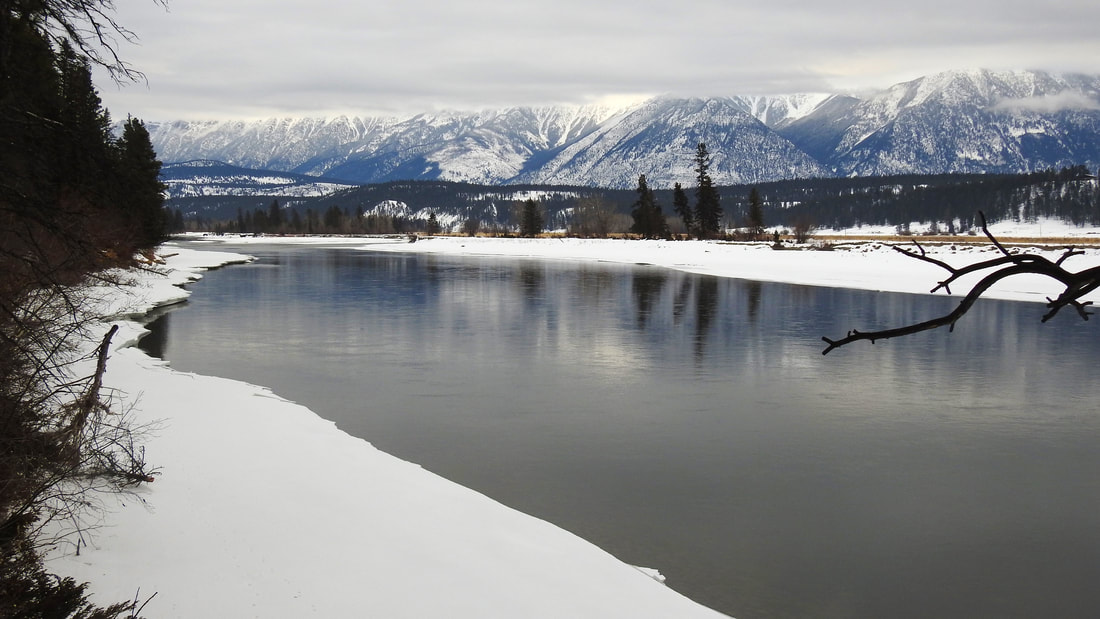
We'll be putting field teams together as people respond. We do need a designated counter for each area and they need to be willing to meet up and coordinate with others that are interested in birding that location.
Please feel free to pass along this info to others you think may be interested in participating this year.
Pre-registration is required so we can cover the areas effectively.
Current public health guidelines will be followed. You'll need your own transportation. We usually have a count-up pot-luck TBA.
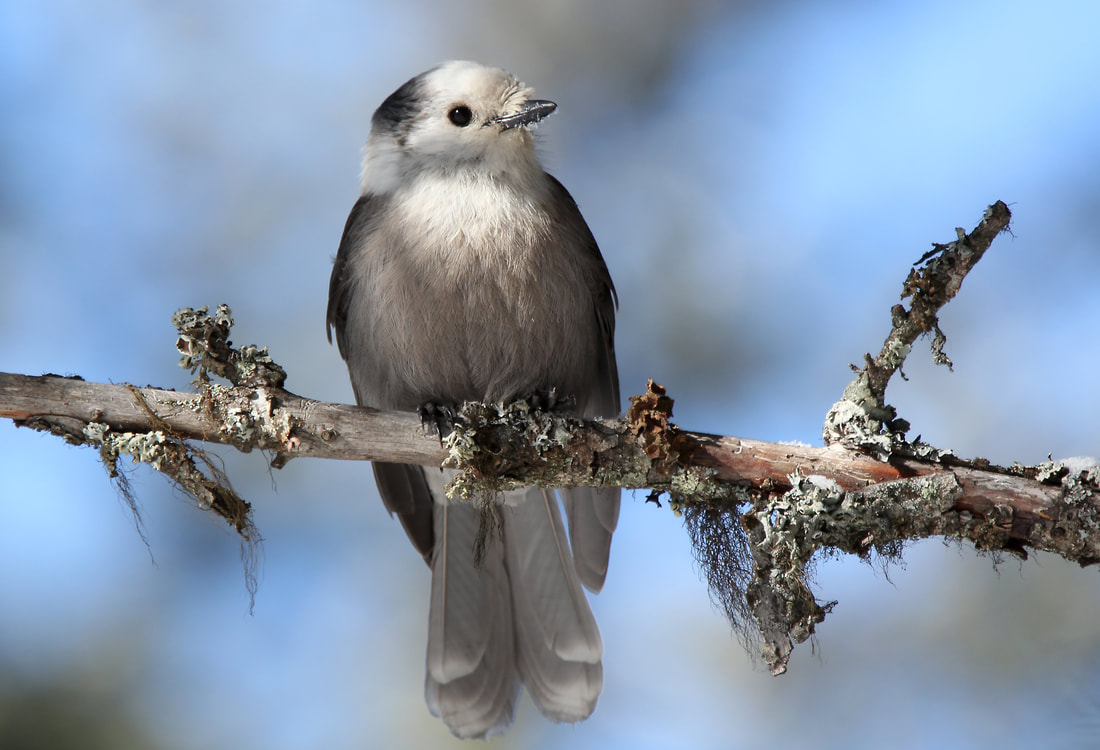
Canada Jay, Helga K photo
Read more at the links below: Audubon Christmas Bird Count Bird Studies Canada British Columbia Field Ornithologists ("CBC" tab). eBird: ebird.org/news/ebirding-on-christmas-bird-counts#participants by Dianne Cooper Revised 2021-12-11 |
|
Our "circles"
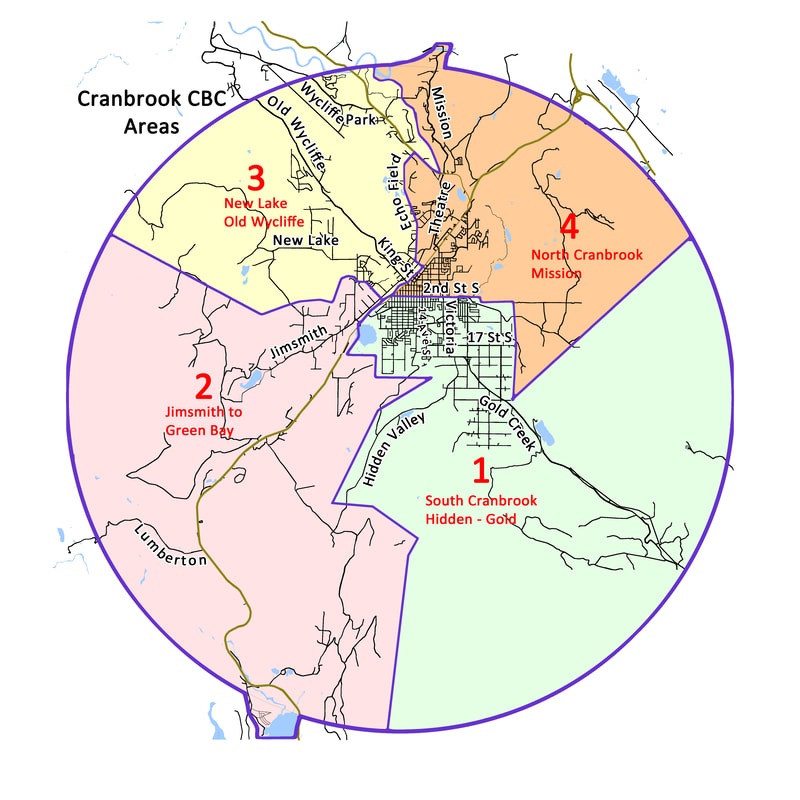 Cranbrook CBC Circle
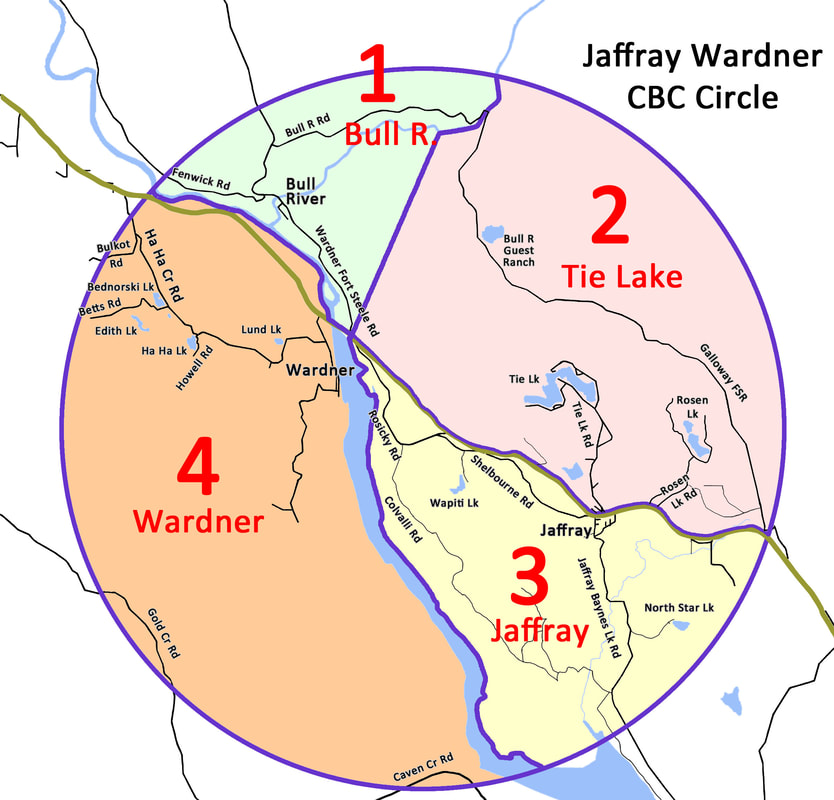
This year, on a Thursday, the most abundant birds were Mallard (365), Wild Turkey (152) and Black-capped Chickadee (113). In previous years, American Crow (157), Dark-eyed Junco (169) and Red Crossbill (98) were the top 3.
Three ‘new’ species were discovered during this third count – White-breasted Nuthatch, Pygmy Nuthatch and Pine Grosbeak. And Townsends Solitaire, Bohemian Waxwing and Red Crossbill could not be found.
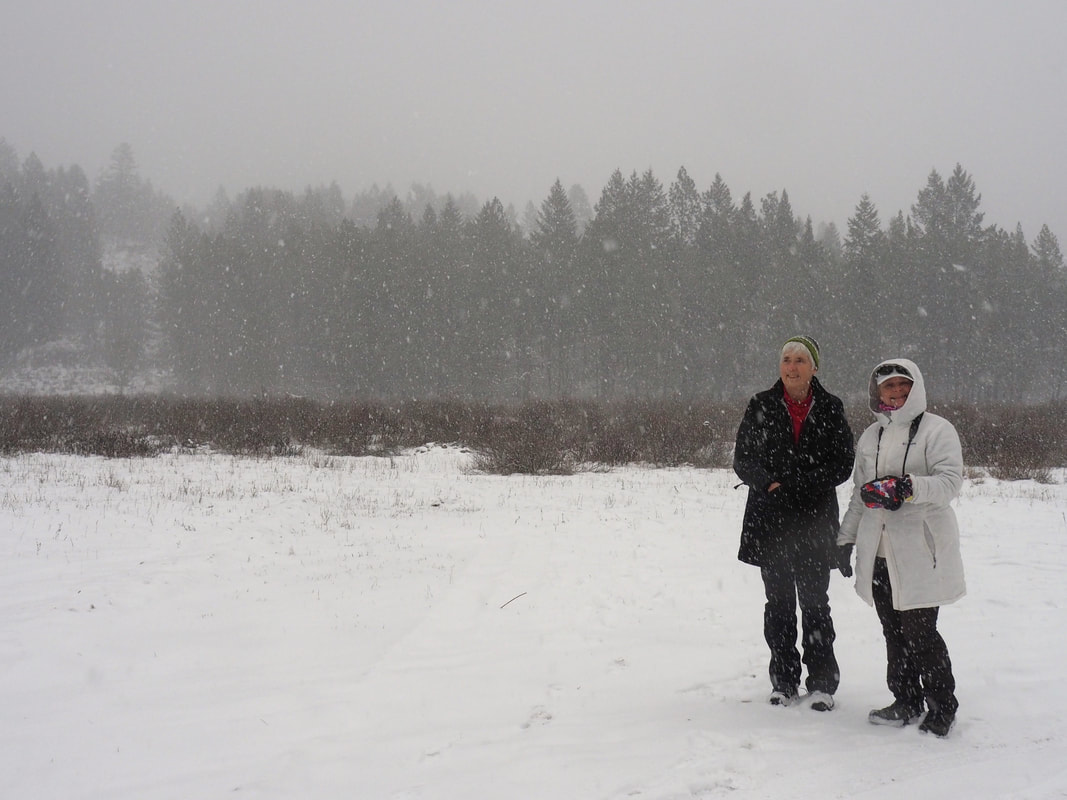
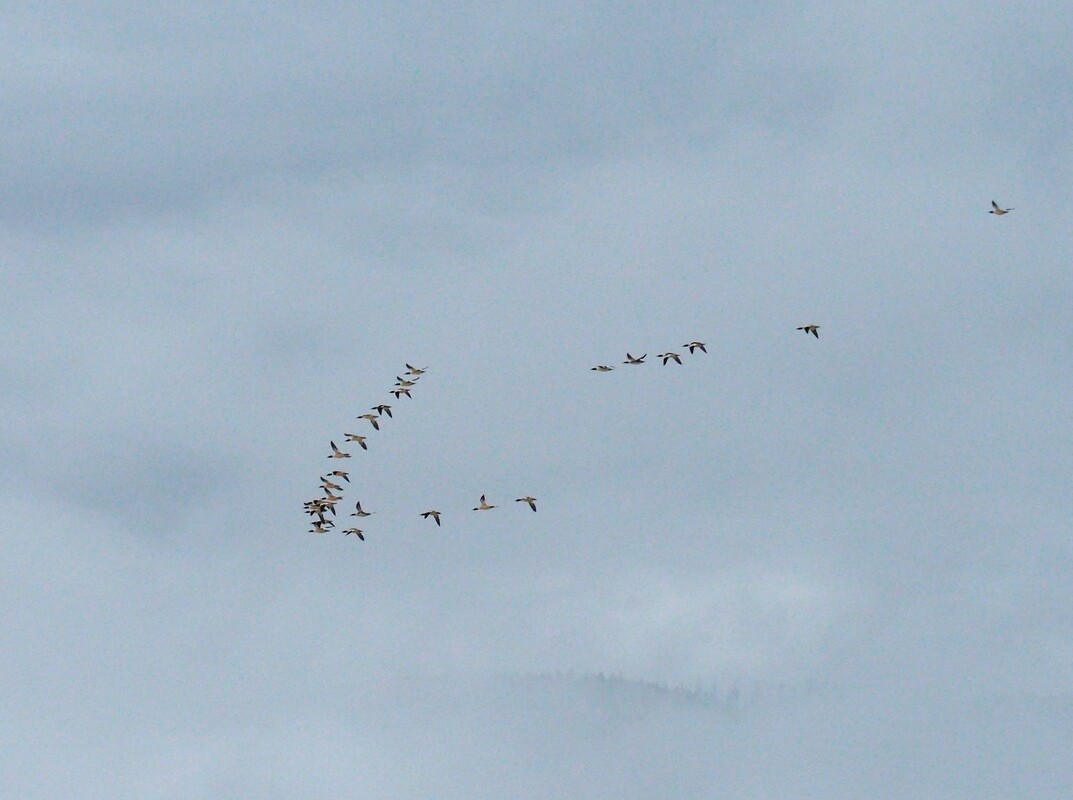
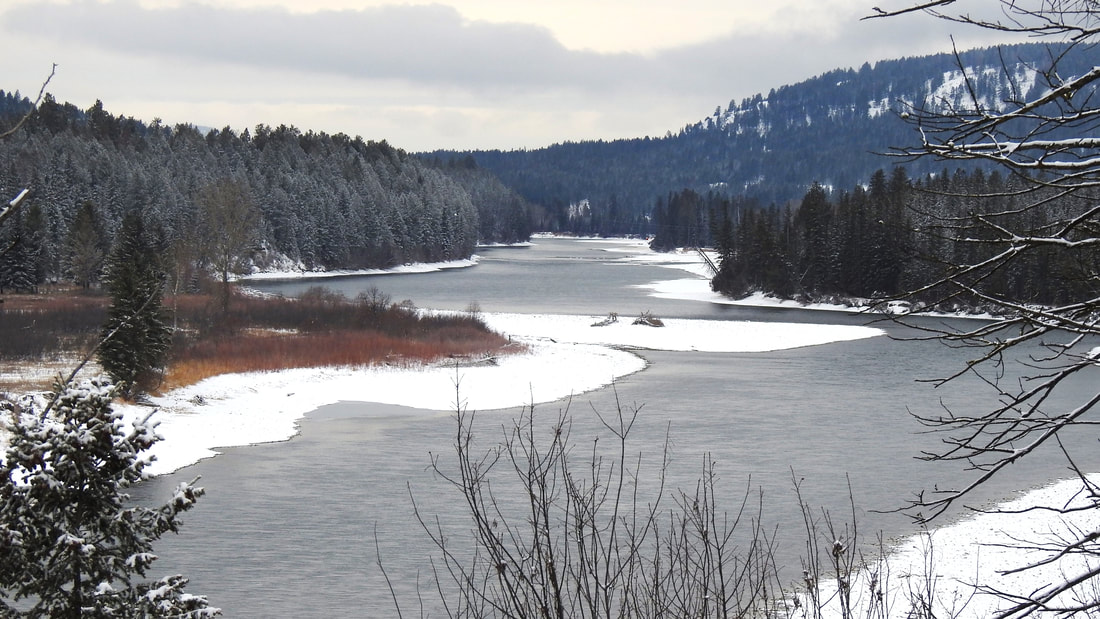
A relatively mild, snowy morning with limited visibility made cameras and binoculars troublesome and caused many small birds to find shelter and hide.
This count provided slightly lower numbers of species (40 vs 45) and individuals (980 vs 1160).
|
Species |
Number |
|
Canada Goose |
9 |
|
Mallard |
365 |
|
Bufflehead |
1 |
|
Common Goldeneye |
17 |
|
Common Merganser |
30 |
|
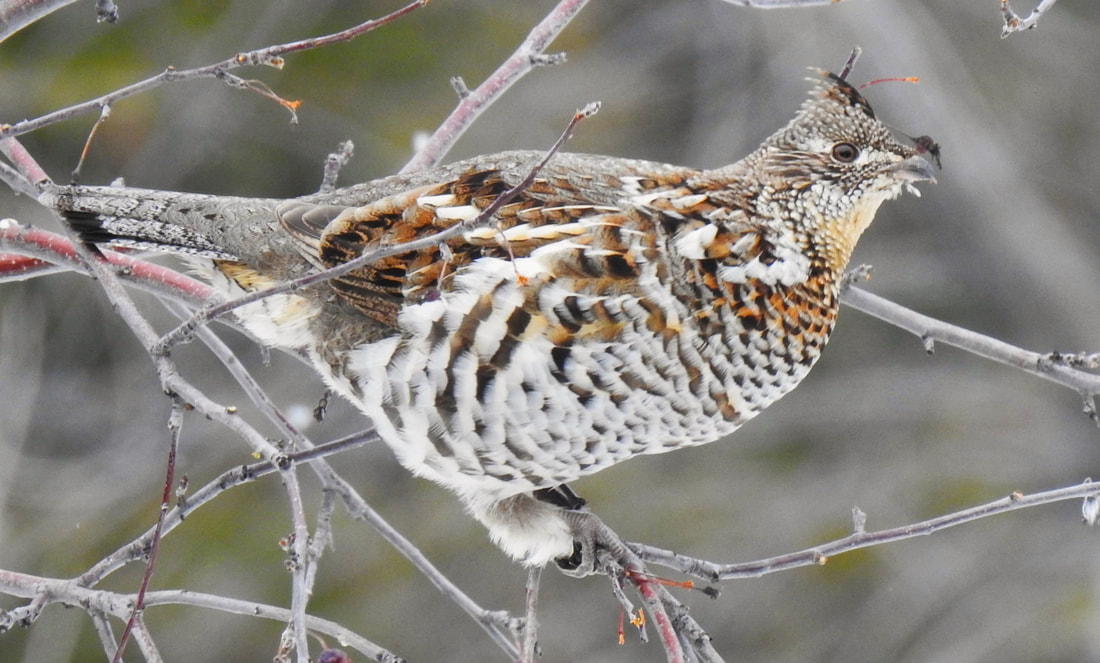
Ruffed Grouse |
3 |
|
Wild Turkey |
152 |
|
Bald Eagle |
8 |
|
Red-tailed Hawk |
3 |
|
Eurasian Collared-Dove |
9 |
|
Belted Kingfisher |
4 |
|
Downy Woodpecker |
6 |
|
Hairy Woodpecker |
5 |
|
Northern Flicker |
23 |
|
Pileated Woodpecker |
2 |
|
Northern Shrike |
1 |
|
Gray Jay |
1 |
|
Steller's Jay |
16 |
|
Blue Jay |
1 |
|
Black-billed Magpie |
4 |
|
Clark's Nutcracker |
1 |
|
American Crow |
4 |
|
Common Raven |
54 |
|
Black-capped Chickadee |
113 |
|
Mountain Chickadee |
59 |
|
Chestnut-backed Chickadee |
2 |
|
chickadee sp. |
3 |
|
Red-breasted Nuthatch |
24 |
|
White-breasted
Nuthatch |
2 |
|
Pygmy
Nuthatch |
1 |
|
Brown Creeper |
1 |
|
American Dipper |
5 |
|
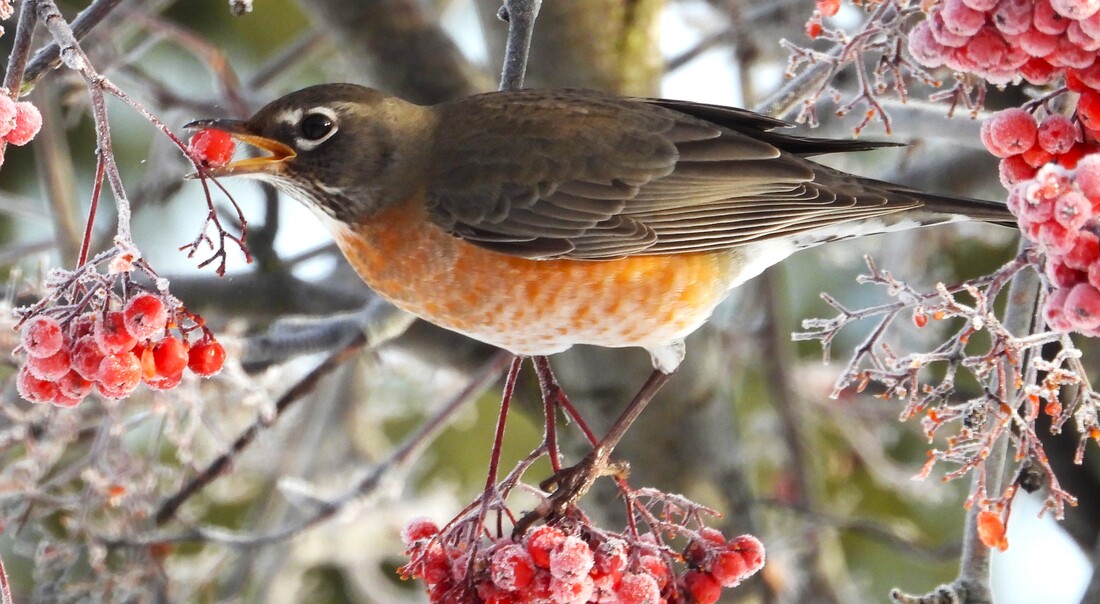
American Robin |
2 |
|
European Starling |
8 |
|
Dark-eyed Junco |
2 |
|
Song Sparrow |
4 |
|
Pine
Grosbeak |
11 |
|
House Finch |
2 |
|
Red Crossbill |
1 |
|
Evening Grosbeak |
2 |
|
House Sparrow |
7 |
|
passerine sp |
12 |
|
Total Individuals |
980 |
|
Total Species Reported |
40 |
By Dianne Cooper
Updated 2023-01-08
The 26th annual Christmas Bird Counts for Cranbrook and Kimberley were held on December 29, 2023, and January 3, 2024, respectively.
The Christmas Bird Count is the longest running citizen science project in the world and data contributes much to our understanding of bird population trends and distribution.
Cranbrook CBC Results
#124 - National Audubon Society, Birds Canada
#26 - Cranbrook
Count code: BCCB
Count day: 29 Dec 2023
Count week: 26 Dec 2023 – 01 Jan 2024
Species total: 47 (39 species last year, average 44, all years 101 species)
– plus 3 species during count week
Total number of individual birds: 2,194 (1,511 last year, average 2,576)
Summary
This was the 26th official count for the Cranbrook CBC.
The word for this year’s count is “solid”. While several species again had low numbers, we managed to find at least few of each to bump up our overall species tally – so “near-misses” – giving us 8 more species than last year.
Missed: We missed only four species that we could expect: Wild Turkey, Northern Pygmy-Owl, Belted Kingfisher, and American Goldfinch.
The weather was unusually pleasant with little to no wind, some sunshine in the afternoon, and warm temperatures around freezing. There was little snow cover everywhere; all no doubt made possible by the El Nino phenomenon this year.
The counters: People going out into the field driving or walking, numbered 15 birders and friends and we walked 15 km and drove 344 km. Six feeder watchers contributed feeder counts reporting one unique species (Spotted Towhee) and 208 individual birds.
One new species was added to the Cranbrook Christmas Bird Count list: Long-tailed Duck (4), a strikingly beautiful duck whose male has long tail feathers in summer, the females have a large black cheek patch surrounded by white in the winter. They are a rare visitor in the area during migration and winter, preferring the ocean in non-breeding season the tundra for breeding. Perhaps these ducks were brought in by the same weather conditions that gave us a rare Pomarine Jaeger in October.
Rare for the count were a White-crowned Sparrow, not seen on the count since 1999, a Spotted Towhee which has been on only four of our 26 counts, and a Cassin’s Finch – these species are not uncommon in summer.
The 2,194 individual birds counted were an average number for the 26 years of the Cranbrook count but welcome after low (1,511) numbers last year. This was bolstered by record numbers of Mountain Chickadee (244, average 110).
Teamwork
The Christmas Bird Count is a brilliant example "community science". Frequently, one field team or a feeder watcher are the only ones to see a species. This year 13 species were seen by only one team.
The South Cranbrook team got our only American Robin (2), which were hanging out with some Blue Jays near Victoria Avenue. The Jimsmith-Moyie team saw the only Common Goldeneye (7), Common Merganser (3), Great Blue Heron (1), Red Crossbill (11), and first for the count Long-tailed Duck (4). The New Lake-Old Wycliffe team scraped up one Clark’s Nutcracker and two Brown Creeper. The Mission-North Cranbrook team found our only Mourning Dove, Cassin’s Finch, and White-crowned Sparrow – one of each – as well as Red-winged Blackbird (8) and Evening Grosbeak (6). A feeder watcher in South Cranbrook got the Spotted Towhee that has been hanging around their feeder all winter and continues.
Low Numbers
Bohemian Waxwing (93) numbers for the past 10 years have ranged from 11 to 825. Their numbers are always variable and are low again this year. Common Goldeneye (7) numbers have been trending downward the past three years.
High Numbers
European Starling (114) numbers were the second highest number to date; the most we’ve counted was 181 in 2014. The 244 Mountain Chickadee counted was the second highest total for them to date; the highest was 292 in 2020. This put them in the second most numerous species this year, after first-place Mallard (309). The most numerous species usually alternates between Mallard and Bohemian Waxwing, with House Finch taking third spot.
Count Week
Species that were missed on count day but seen during the three days before or after (in other words, we could have got if we had been at the right place at the right time) were Green-winged Teal and Horned Grebe, both seen by people foraying to Moyie Lake to get the Long-tailed Duck.
Winter feeder species
Below average numbers of Common Redpoll (71) were seen but this was better than last year when we saw only twelve. Above average numbers of Pine Grosbeak (53) were seen; we missed them last year so it’s nice to get this number. Their numbers are always variable. Clark's Nutcracker (1) has shown a general down trend since a high of 90 in 2011. The low number of Evening Grosbeak (6) shows how sporadic spotting them has been the past eight years; perhaps they are missing consistently filled feeders. Red Crossbill (11) numbers had been increasing the previous 4 years but are low again this year. One Cassin's Finch was seen, which is unusual because they are mostly a spring and autumn species. They have been on twelve of our 26 counts.
Year-round species
Below average were Pileated Woodpecker (2), Dark-eyed Junco (15), which have had good numbers the past six years, Song Sparrow (7), and House Finch (143), which was almost half of average like last year.
Above average were Downy Woodpecker (22), whose numbers recovered from a low in 2021, Hairy Woodpecker (17), whose numbers recovered from a low of 4 in 2021, Northern Flicker (45), which were close to their highest (51) from 2018, Steller's Jay (11), which has been missed only once in 26 counts, and Red-breasted Nuthatch (73), which were low in 2021 but numbers have been good for them the past six years.
Average numbers were seen for Canada Jay (9), which continues on every count, Blue Jay (15), Black-capped Chickadee (102), and White-breasted Nuthatch (5) which has been on only three of the past 7 counts but was reliable before that.
High numbers of Mountain Chickadee (244) were counted. This is their second highest number on 26 counts; the highest was 292 in 2020. They may be showing an upward trend.
Low numbers of Pine Siskin (4) were counted but they were missed altogether the previous two years. Hopefully, they are just somewhere else again this winter. The eBird “Trends” map says they are generally increasing in the area https://science.ebird.org/en/canada/status-and-trends/species/pinsis/trends-map
Introduced species
Below average numbers of Eurasian Collared-Dove (6) were found – this species was first recorded on a Cranbrook count in 2012. Rock Pigeon (Feral Pigeon) (184) were above average. House Sparrow (38) was below average and most birds were not in their usual spot at Superstore or Walmart. European Starling (114) numbers were their second highest ever; the highest was 181 in 2014.
Numerous species
Bohemian Waxwing (93) numbers were low again; they have ranged from 11 to 825 over the past 10 years. Common Raven (223) was a bit below average.
Mallard (309) numbers were above average and they were spread out throughout the city, even the Gold Creek area. American Crow (249) had high numbers – their third highest number to date.
Year-round species
Bald Eagle (4) and Townsend’s Solitaire (4) numbers were a bit below average but they continue on every count. The only year-round species above average was Black-billed Magpie (5). Average numbers were seen for Merlin (2), Chestnut-backed Chickadee (3), which has been on 7 of 26 counts, Brown Creeper (2), which has been on the last six counts, American Dipper (9), which was missed last year, unsurprisingly, given the icy weather, so it’s good to get average number this year. Mourning Dove (1) are still scarce.
Winter species
Winter visitor Northern Shrike (2) has been on nineteen of our 26 counts.
Summer species
The two American Robin seen is below average but they have been on 17 of 26 counts. Seeing three Red-tailed Hawk is typical and they have been on almost half of the Cranbrook counts. Common Merganser (3) have been on five of past 7 counts but they were scarce previously. Getting Great Blue Heron (1) has been infrequent the past 14 years but was usual on earlier counts. Red-winged Blackbird (8) numbers were average and they have been on eleven of the past 26 counts. This is the third time for White-crowned Sparrow (1) on the Cranbrook count and only the fourth for Spotted Towhee – both are common here in summer.
|
#124 /
26 Cranbrook CBC Results 29 Dec 2023 |
|||
|
|
Trend |
Species |
|
|
1 |
>
avg |
Mallard |
309 |
|
cw |
|
Green-winged
Teal |
|
|
2 |
first |
Long-tailed
Duck |
4 |
|
3 |
low |
Common
Goldeneye |
7 |
|
4 |
average |
Common
Merganser |
3 |
|
cw |
|
Common
Loon |
|
|
cw |
|
Horned
Grebe |
|
|
5 |
average |
Great
Blue Heron |
1 |
|
6 |
<
avg |
Bald Eagle |
4 |
|
7 |
>
avg |
Red-tailed
Hawk |
3 |
|
8 |
>
avg |
Rock
Pigeon (Feral Pigeon) |
184 |
|
9 |
<
avg |
Eurasian
Collared-Dove |
6 |
|
10 |
unusual |
Mourning
Dove |
1 |
|
11 |
>
avg |
Downy
Woodpecker |
22 |
|
12 |
>
avg |
Hairy
Woodpecker |
17 |
|
13 |
>
avg |
Northern
Flicker |
45 |
|
14 |
<
avg |
Pileated
Woodpecker |
2 |
|
15 |
average |
Merlin |
2 |
|
16 |
average |
Northern
Shrike |
2 |
|
17 |
average |
Canada
Jay |
9 |
|
18 |
>
avg |
Steller's
Jay |
11 |
|
19 |
average |
Blue Jay |
15 |
|
20 |
>
avg |
Black-billed
Magpie |
5 |
|
21 |
low |
Clark's
Nutcracker |
1 |
|
22 |
high |
American
Crow |
249 |
|
23 |
<
avg |
Common
Raven |
223 |
|
24 |
average |
Black-capped
Chickadee |
102 |
|
25 |
high |
Mountain
Chickadee |
244 |
|
26 |
average |
Chestnut-backed
Chickadee |
3 |
|
|
|
chickadee
sp. |
19 |
|
27 |
>
avg |
Red-breasted
Nuthatch |
73 |
|
28 |
average |
White-breasted
Nuthatch |
5 |
|
29 |
average |
Brown
Creeper |
2 |
|
30 |
average |
American
Dipper |
9 |
|
31 |
<
avg |
Townsend's
Solitaire |
4 |
|
32 |
<
avg |
American
Robin |
2 |
|
33 |
high |
European
Starling |
114 |
|
34 |
low |
Bohemian
Waxwing |
93 |
|
35 |
<
avg |
Dark-eyed
Junco |
15 |
|
36 |
rare |
White-crowned
Sparrow |
1 |
|
37 |
<
avg |
Song
Sparrow |
7 |
|
38 |
unusual |
Spotted
Towhee |
1 |
|
39 |
average |
Red-winged
Blackbird |
8 |
|
40 |
low |
Evening
Grosbeak |
6 |
|
41 |
>
avg |
Pine
Grosbeak |
53 |
|
42 |
<
avg |
House
Finch |
143 |
|
43 |
unusual |
Cassin's
Finch |
1 |
|
44 |
<
avg |
Common
Redpoll |
71 |
|
45 |
low |
Red
Crossbill |
11 |
|
46 |
low |
Pine
Siskin |
4 |
|
47 |
low |
House
Sparrow |
38 |
|
|
|
passerine
sp. |
8 |
|
|
|
|
2162 |
#124 - National Audubon Society, Birds Canada
#26 - Kimberley
Count code: BCKB
Count day: 03 Jan 2024
Count week: 31 Dec 2023 – 06 Jan 2024
Species total: 46 (40 species last year, average 44, all years 82 species)
– plus 3 species during count week
Total number of individual birds: 2,194 (1,511 last year, average 2,329)
Summary
This was the 26th official count for the Kimberley CBC.
The words for this year’s count are “woodpecker slam dunk” for the wondrous count of 18 woodpeckers of 5 different species seen by one team in one area – the recent burn at the end of LD Ranch Road. They got 3 American Three-toed, 5 Black-backed, 2 Downy, 4 Hairy, and 4 Pileated Woodpeckers within a single kilometer – that’s a lot of drumming!
Missed: Notable misses were Snow Bunting, after being seen on the previous three counts and Varied Thrush which had been reported earlier in the week but did not show on count day. It was seen after count day, too.
The weather for the Kimberley count, as with the Cranbrook one, was unusually pleasant with little to no wind and warm temperatures around freezing. There was exceptionally light snow at various times but it did not impede seeing birds. Snow cover was also unusually thin.
The counters: People going out into the field driving or walking, numbered 16 birders and friends and we walked 15 km and drove 295 km. Three other feeder watchers contributed feeder counts contributing one unique and rare-in-winter species in Wycliffe townsite, White-crowned Sparrow (2).
Also rare for the count was a lone Canada Goose, which has been on only six of our 26 counts but obviously some hardy ones only go as far south as they have to.
No new species were added to the Kimberley CBC circle this year. The last new species was Sharp-shinned Hawk added last year.
The 1,572 individual birds counted were a low number again which has brough down the average number of individuals to 2,329 from 2,361 last year.
Teamwork
The Christmas Bird Count is a brilliant example "community science". Frequently, one field team or a feeder watcher are the only ones to see a species. This year 15 species were seen by only one team.
The Kimberley-Marysville team got our only Stellar’s Jay (2), European Starling (3), Pine Grosbeak (30), and Red Crossbill (1). The Wasa-Ta Ta Creek team got our only Canada Goose (1), Common Goldeneye (19), Cooper’s Hawk (1), Belted Kingfisher (1), and Townsend’s Solitaire (2). The Wycliffe team got our only Northern Shrike (1), American Robin (1), Black-backed Woodpecker (5), American Three-toed Woodpecker, and Pygmy Nuthatch (6).
A feeder watcher in Wycliffe reported our only White-crowned Sparrow and she had two of them! Nice!
Numerous species
Our usual most numerous species, Bohemian Waxwing (356), held the top spot again but numbers were low; in recent years, their numbers have ranged between 300 and 600. Our second most numerous species this year was Mountain Chickadee (149) which often comes in second. Common Raven (126) numbers have been steady over the 26 years of the count. American Crow (8) numbers were low this year perhaps because the Marysville area frequented by crows was not visited by the field counters.
High Numbers
We got a new maximum for Mallard (37) which were found in Wasa and Wycliffe areas;, they are still not as numerous as in the Cranbrook CBC circle. Bald Eagle (19) also showed a new maximum number; they are increasing in number in the winter here, mostly in the valley bottom. American Goldfinch (56) showed well on the Kimberley count with a new maximum; they were low in Cranbrook so perhaps most of the birds usually in Cranbrook were this way this year.
Count Week
Species that were missed on count day but seen during the three days before or after (in other words, we could have got if we were at the right place at the right time) were a Varied Thrush (1) which had been seen before and after the count and Pine Siskin, which in 2019 was our most numerous species but only 3 were seen during count week.
Winter feeder species
Clark's Nutcracker (76) had a decent, above average number his year after being low for the previous 11 years. Pine Grosbeak (30) numbers were average which is nice because they were missed last year. Common Redpoll (59) numbers were low and they were also missed last year. Red Crossbill (1) was almost missed but we managed to identify one. Like Pine Siskin, this is another irruptive species and it was our most numerous species in 2022 with 322 Pine Grosbeak seen.
Year-round species
Downy Woodpecker (12) numbers were low this year – they showed a high of 38 in Jan 2022. Black-capped Chickadee (119) numbers were below average but they have had steady numbers the past few years.
Above average numbers were seen of Northern Flicker (33), Pileated Woodpecker (10), Blue Jay (12), whose numbers are slowly increasing in the area, Mountain Chickadee (149), and Red-breasted Nuthatch (62), which were not as numerous as the previous three years.
Average numbers were counted of Hairy Woodpecker (15), Canada Jay (3), White-breasted Nuthatch (7), which is fewer than 20 years ago but the past several years have seen more consistent numbers. Also average in number were Pygmy Nuthatch (6), which first showed up in 2013 and have now been on nine counts, Song Sparrow (5), and House Finch (107).
Steller's Jay (2) numbers have not been this low since Jan 2003 and Dark-eyed Junco (9) numbers were half of average after high numbers last year.
Introduced species
House Sparrow (20) numbers were below average but they were missed last year; they have been on 20 of 26 counts. Rock Pigeon (Feral Pigeon) (69) numbers are increasing especially in the last 6 years, and this year they were above average. Eurasian Collared-Dove (15) numbers were down quite a bit from their maximum of 50 in 2020; but they only arrived in the area in 2012. Numbers of European Starling (3) were low this year.
Year-round species
The three Ruffed Grouse (3) counted is an average number for the Kimberley count. One bird was found only because the counters backed up and got out to retrieve a 10-dollar bill sticking out of a snowbank. When doing a double-take with the hopes of finding more bills, they finally noticed the grouse only a few feet away – a ten-dollar bird! It was in the top of a saskatoon bush happily nibbling on new shoots.
Also with average numbers were Belted Kingfisher (1), which is on half our counts, as well as American Three-toed Woodpecker (3), Black-billed Magpie (19), American Dipper (2), and Brown Creeper (2), which was missed last year but is on 18 of 26 Kimberley counts.
Townsend's Solitaire (2) was of low number but they have been recorded on 24 of out 26 counts.
For unusual species that may be encountered at any time of year, we got one Cooper's Hawk and five Black-backed Woodpecker (5) in a recent burn - common habitat for the latter because they are more bark-flakers than wood-peckers and bark is easier to flake off of burnt trees.
Wild Turkey (61) numbers are still good in the Kimberley Count Circle.
Winter species
The one Northern Shrike (1) spotted was a usual number on count day and they have been seen on 20 of the 26 Kimberley counts.
Summer species
For species more common in summer, the number of Common Goldeneye (19), Common Merganser (3), and Red-tailed Hawk (2) were average. We missed Red-tail last year but they are usually on half the counts. The average number of American Robin (1) is eight, so seeing only one is low; they have been on 20 of 26 counts.
Canada Goose (1) and White-crowned Sparrow (2) can be considered rare in winter in the Kimberley Count Circle.
|
#124 /
26 Kimberley CBC Results
03 Jan 2024 |
|||
|
Species # |
Trend |
Species |
Nr |
|
1 |
rare |
Canada
Goose |
1 |
|
2 |
max |
Mallard |
37 |
|
3 |
average |
Common
Goldeneye |
19 |
|
4 |
average |
Common
Merganser |
3 |
|
5 |
average |
Ruffed
Grouse |
3 |
|
6 |
>
avg |
Wild
Turkey |
61 |
|
7 |
rare |
Cooper's
Hawk |
1 |
|
8 |
max |
Bald
Eagle |
19 |
|
9 |
average |
Red-tailed
Hawk |
2 |
|
10 |
>
avg |
Rock
Pigeon (Feral Pigeon) |
69 |
|
11 |
average |
Eurasian
Collared-Dove |
15 |
|
12 |
average |
Belted
Kingfisher |
1 |
|
13 |
<
avg |
Downy
Woodpecker |
12 |
|
14 |
average |
Hairy
Woodpecker |
15 |
|
15 |
average |
American
Three-toed Woodpecker |
3 |
|
16 |
rare |
Black-backed
Woodpecker |
5 |
|
17 |
>
avg |
Northern
Flicker |
33 |
|
18 |
>
avg |
Pileated
Woodpecker |
10 |
|
19 |
average |
Northern
Shrike |
1 |
|
20 |
average |
Canada
Jay |
3 |
|
21 |
low |
Steller's
Jay |
2 |
|
22 |
|
Blue Jay |
12 |
|
23 |
average |
Black-billed
Magpie |
19 |
|
24 |
>
avg |
Clark's
Nutcracker |
76 |
|
25 |
low |
American
Crow |
8 |
|
26 |
average |
Common
Raven |
126 |
|
27 |
< avg |
Black-capped
Chickadee |
119 |
|
28 |
>
avg |
Mountain
Chickadee |
149 |
|
29 |
>
avg |
Red-breasted
Nuthatch |
62 |
|
30 |
average |
White-breasted
Nuthatch |
7 |
|
31 |
average |
Pygmy
Nuthatch |
6 |
|
32 |
average |
Brown
Creeper |
2 |
|
33 |
average |
American
Dipper |
2 |
|
34 |
low |
Townsend's
Solitaire |
2 |
|
35 |
low |
American
Robin |
1 |
|
|
cw |
Varied
Thrush |
|
|
36 |
low |
European
Starling |
3 |
|
37 |
low |
Bohemian
Waxwing |
356 |
|
38 |
low |
Dark-eyed
Junco |
9 |
|
39 |
rare |
White-crowned
Sparrow |
2 |
|
40 |
average |
Song
Sparrow |
5 |
|
41 |
average |
Pine
Grosbeak |
30 |
|
42 |
>
avg |
House Finch |
107 |
|
43 |
low |
Common
Redpoll |
59 |
|
44 |
low |
Red
Crossbill |
1 |
|
|
cw |
Pine
Siskin |
|
|
45 |
max |
American
Goldfinch |
56 |
|
46 |
<
avg |
House
Sparrow |
20 |
|
|
|
chickadee
sp. |
7 |
|
|
|
finch
sp. |
10 |
|
|
|
Golden/Bald
Eagle |
1 |
|
|
|
|
1572 |
The Importance of Participation
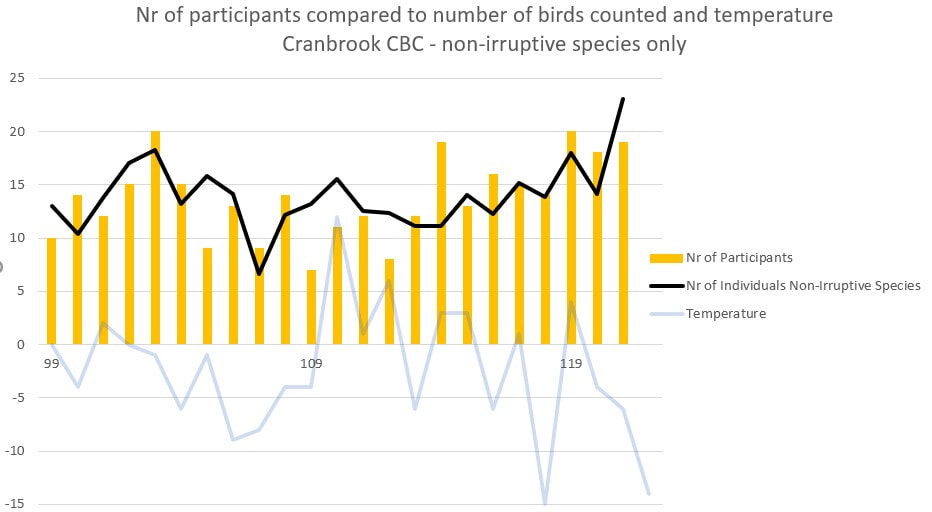
Only the common everyday species that are resident here in the winter are included in the number of individual birds = non-irruptive. The "irruptive" species such as Bohemian Waxwing, and Common Redpoll are not included because their numbers fluctuate widely from year to year.
The more people counting, the more birds get counted. Temperature doesn't seem to have a consistent effect on how many birds there are to be counted, nor on how many people brave winter to participate. Weather, as in "is it snowing", likely had a big effect yesterday; this is the first count in a long time that we had to do during a snow storm.
